

Winter’s Bounty
In November, when everyone seems to be elbow-deep in squash, the Northwest’s most compelling harvest is happening out of sight in the cold Pacific waters. Dungeness crab is hardening into its winter best while oysters sit tight in the bays, cool, plump and briny.
When we talk about eating seasonally, most often it’s about what is currently harvestable from a farm. We all know that apples and pears hit the scene after the sunny stone fruit season and that, come late fall and winter, your choice for fresh produce is basically kale. And while seafood arrives at the market regardless of the season, it’s important to remember that the sea has seasons too, and winter is one of its most generous.
Crack On
Dungeness is by far the biggest celebrity from our cold-water harvest. It can serve as an impressive centerpiece for the holiday table but is also perfect for a more informal feast. Put a platter of cracked crab in front of people and watch it disappear.
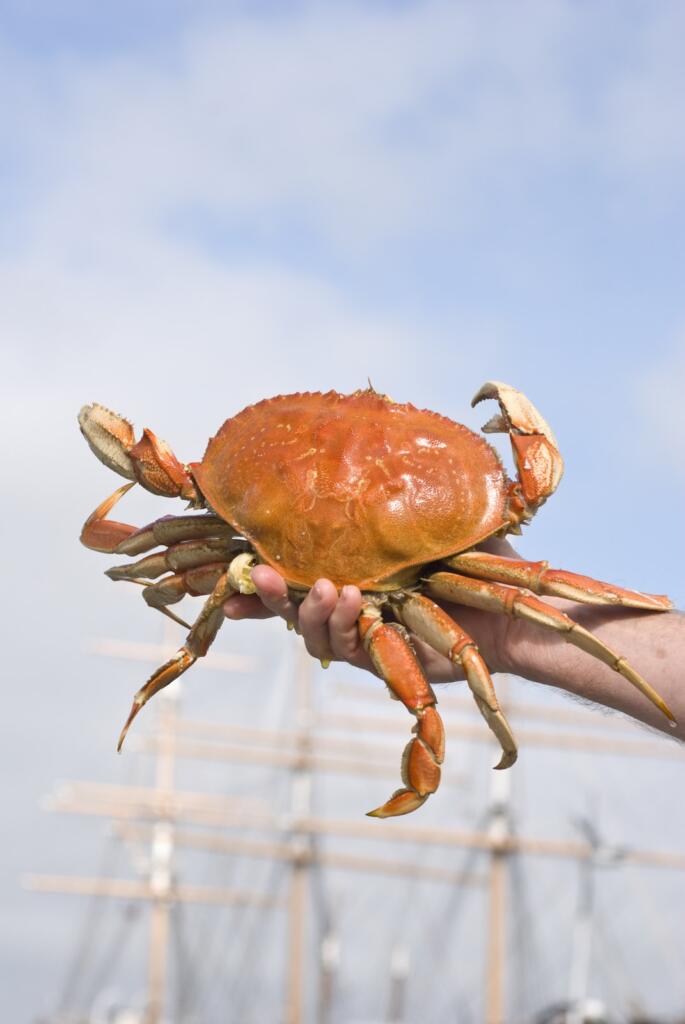
The crab takes its common name from Dungeness, a community near Sequim, Washington, beside the long spit that reaches into the Strait of Juan de Fuca. Shellfish has sustained Coast Salish communities throughout the region, and today, Dungeness remains a traditional food and an important commercial catch for tribal fishers and coastal fleets.
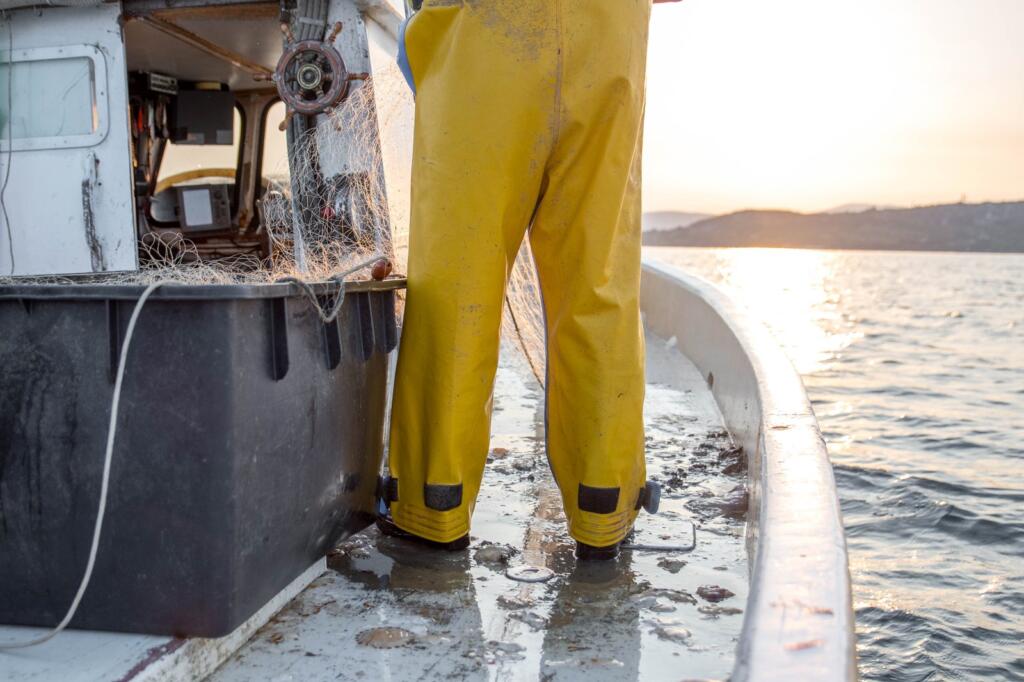
The commercial season is tied to the crab itself, not the calendar. Nature doesn’t work on our timeline. Dungeness crabs grow by molting, shedding a hard shell and forming a larger, initially soft one. Just after a molt, a crab may look substantial but contain little meat. As its new shell hardens, the crab fills it out. Fishery managers test shell condition and meat recovery before opening sections of the Washington coast for fishing, so opening dates shift from year to year. The wait can be frustrating, but it provides a better harvest.
In his 1964 memoir, “Delights and Prejudices,” Oregon native and champion of American cookery James Beard called Dungeness “the Pacific’s greatest blessing.” His ideal meal was freshly boiled crab, cooled and served with homemade mayonnaise, bread and butter, and beer or a very light white wine. This was the meal he said the gods intended “only for the pure in palate,” reflecting his belief that an exceptional local ingredient needs little embellishment.
For an easy dinner, ask the fishmonger to clean a cooked crab, then at home, warm the sections gently, set out melted butter and lemon and crack on. If you’re up for more prep, make a classic crab Louie salad or add crab meat to linguine with garlic, butter, chili and lemon.
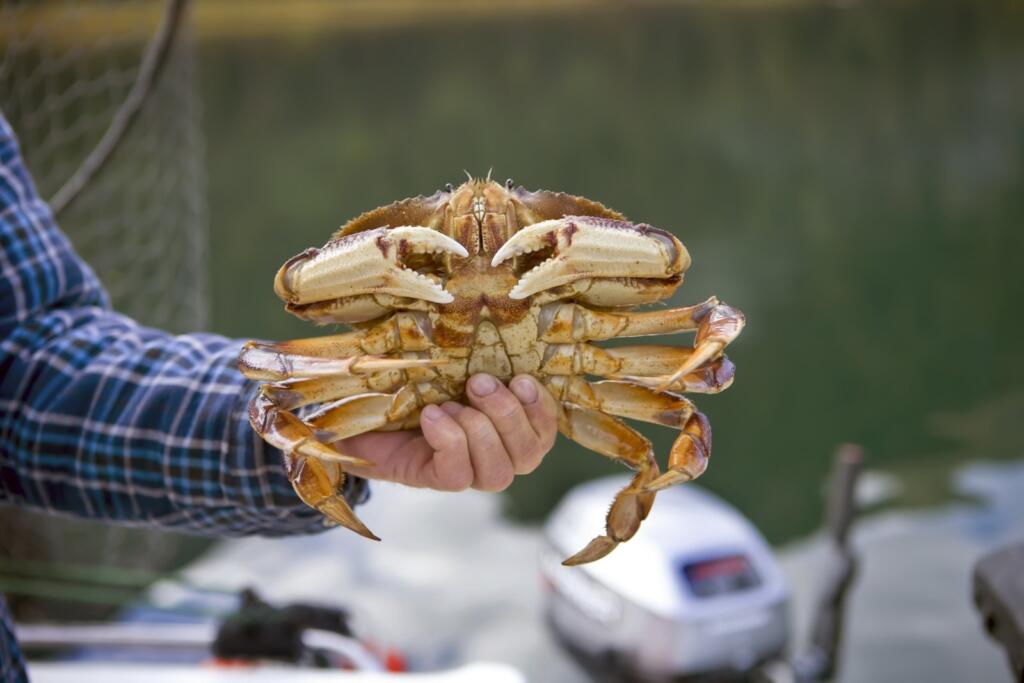
At the counter, buy a crab that is alive or was cooked that day. A live one should act like it: legs working, claws ready. Pick it up. It should feel heavy for its size, dense rather than hollow. A light crab may be a recent molt, all shell and water. The shell should be hard, with no give when pressed, and the smell clean and briny, never sharp. If it is cooked, look for a bright orange shell and legs tucked tight.
Shell Yeah!
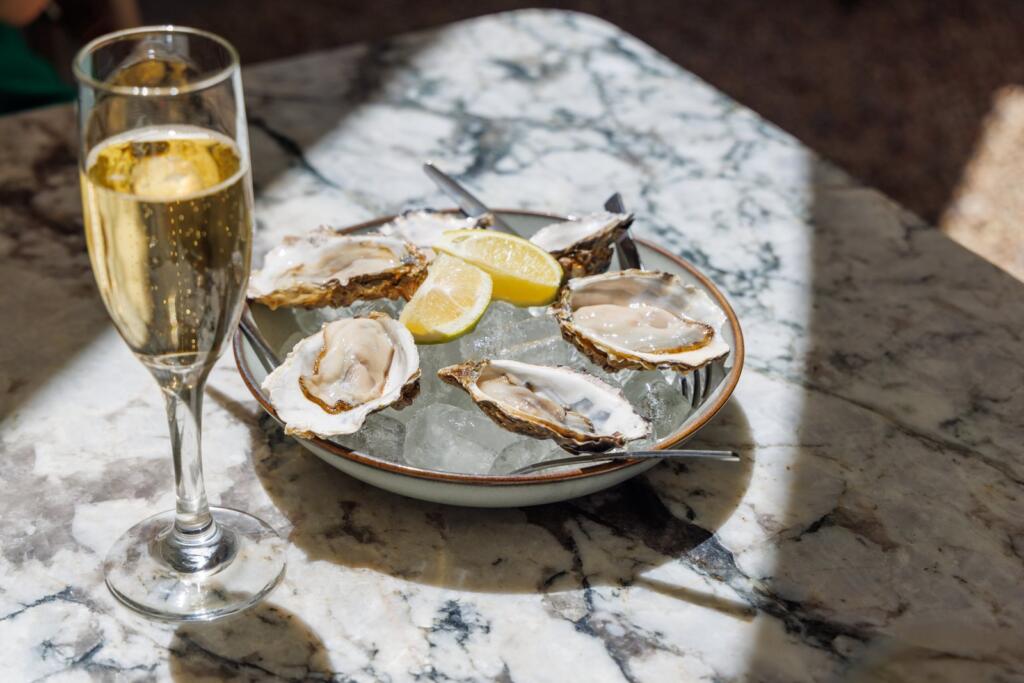
Oysters have a somewhat highfalutin reputation these days but were once so plentiful along the Pacific (and Atlantic) coasts that they were considered everyday food. Now oysters make any meal an occasion. A silver tray heaped with ice and topped with those craggy, barnacled shells looks instantly festive. Serve them as the opening act with a simple mignonette of minced shallots, black pepper and red wine vinegar, some lemon and a bracingly cold bottle of sparkling wine, and you’re done. Just shuck, pour and settle in.
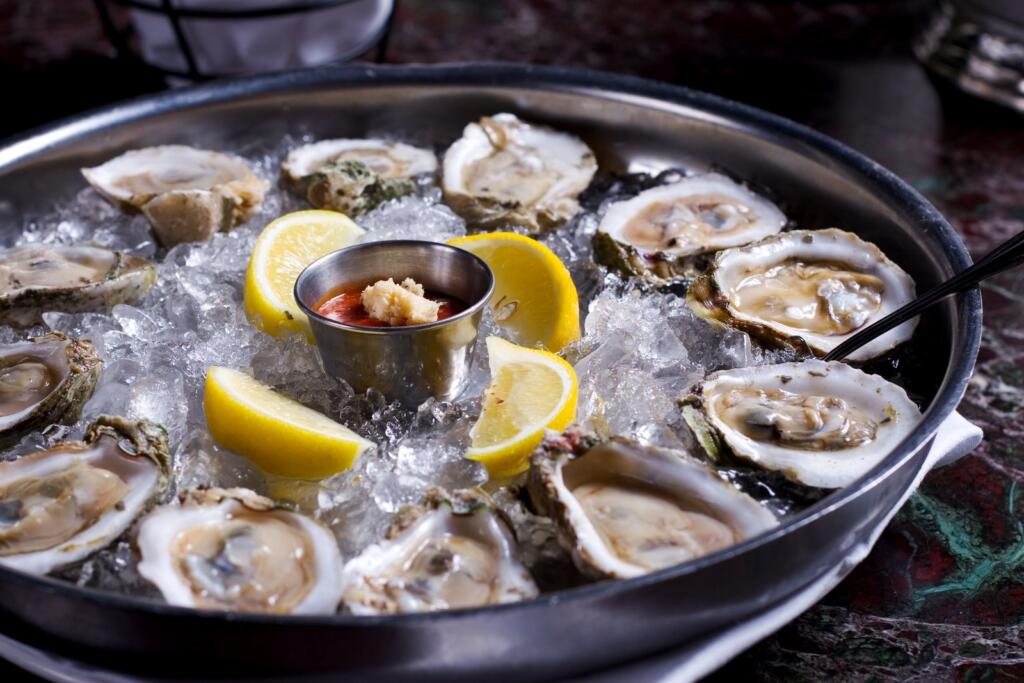
There is no doubt that the oyster is an acquired taste. It’s a wash of salt, sweetness, minerals and a finish that can suggest cucumber, melon or seaweed, depending on the waters in which it was raised. Taste two side by side and the differences become clear.
An oyster spends its adult life in one spot, filtering the water around it. Currents, salinity, plankton and the shape of a bay influence what it tastes like. Names on a Northwest raw-bar list often indicate a beach, bay or growing method rather than a different species. Many are Pacific oysters, introduced from Japan in the early 20th century and now the workhorse of West Coast aquaculture. The tiny Olympia is Washington’s only native oyster and has a concentrated, savory flavor.
Farmed Pacific oysters are available year-round, so the old rule about eating oysters only in months containing an “r” is no longer a commandment, although it remains a useful clue to quality. When buying oysters, look for tightly closed shells and a fresh ocean smell. Keep them cold, cup side down and covered with a damp towel but never submerged in fresh water. Shuck just before serving so the liquor stays in the shell. A squeeze of lemon or a restrained mignonette is plenty. They are also delicious grilled, fried or baked à la oysters Rockefeller with herb butter and breadcrumbs.
What to Pour
Brut Champagne or traditional-method sparkling wine
Tiny bubbles, bright acidity and yeasty depth make this the celebration standard.
Muscadet Sèvre et Maine
Lean, citrusy and faintly saline, it is the classic raw-oyster match.
Chablis
Chalky minerality, citrus and a little more weight suit richer oysters.
Albariño
Lime, stone fruit and a sea-spray edge flatter sweet, briny Pacific oysters.
Sancerre or another dry Sauvignon Blanc
High acidity and herbal notes work particularly well with mignonette.
Picpoul de Pinet
Light, lemony and exceptionally crisp, it is an easy bottle to pour generously.