

Peak Condition
The first powder report of the season has a way of inspiring urgency.
Skis come out of storage. Lift tickets get booked. Legs that haven’t seen a mountain in months are suddenly expected to carve, absorb and stabilize their way through a full day of downhill adventure.
That is why preseason conditioning matters. But preparing for opening day is only the beginning. Once the lifts start running, the body’s needs change—and the workouts that build strength before the season may not be the same ones that keep a skier or snowboarder performing well throughout it.
Think of it as a shift from building to maintaining. Preseason training prepares the body for the demands ahead. In-season training helps it handle those demands repeatedly without becoming depleted, stiff or increasingly vulnerable to injury.
Build Before the Snow
Ideally, preseason conditioning begins six to eight weeks before the first day on the mountain. The goal is to create enough strength, endurance, power and stability to withstand forces the body may not encounter during ordinary workouts.
Skiing and snowboarding place particular demands on the lower body. The quadriceps, hamstrings and glutes work together to maintain an athletic stance, control direction and absorb changes in terrain. Unlike a traditional squat, however, skiing asks these muscles to remain engaged for an extended period while also responding to turns, bumps and shifts in balance.
“All skiers, especially experienced skiers/boarders who enjoy double black diamonds, should focus their training on overall functional strength, pliability and correct biomechanics,” says Bellevue Club personal trainer Catherine Kelly. “It’s so important to keep the body fit and ready for any condition on the mountain.”
That includes muscular endurance, but it also calls for eccentric strength—the ability of a muscle to remain controlled as it lengthens. It comes into play when the legs absorb force, manage speed and hold the body steady through a descent. Squats, split squats, lateral lunges and controlled step-downs help develop that braking power.

Preseason is also the time to introduce more dynamic work. Lateral hops, skater jumps and other carefully progressed plyometric exercises train the body to generate and absorb force while moving from side to side. Interval training on a bike, treadmill, rower or stair climber helps prepare the cardiovascular system for repeated bursts of effort followed by periods of relative recovery.
Balance exercises add another piece to the puzzle. Although standing on an unstable surface can be useful, mountain-ready balance is not simply the ability to remain still. It is the ability to regain control after the terrain, equipment or body moves unexpectedly. Single-leg exercises, multidirectional movements and drills that require a quick but controlled response make balance training more specific to the sport.
Preseason training should become progressively more challenging as the body adapts. The operative word is progressively: Going directly from summer relaxation to box jumps and an ambitious leg-day routine is more likely to result in sore muscles than stronger skiing.
Pilates With a Purpose
Pilates complements traditional strength and cardiovascular training by addressing how the body organizes itself during movement. Skiing may look like a leg-dominant activity, but maintaining control requires coordination between the hips, pelvis, spine and shoulders.
On the Reformer or mat, Pilates exercises challenge the legs while requiring the trunk and pelvis to remain stable. That combination resembles an important demand of skiing: The lower body must adjust beneath a relatively controlled upper body. “Pilates is a safe and effective training method for skiing as it creates body awareness, integrating the deep core with each movement,” says Bellevue Club Pilates instructor Nancy Black. “This aids in hip and back stability and overall strength, power, control and balance.”
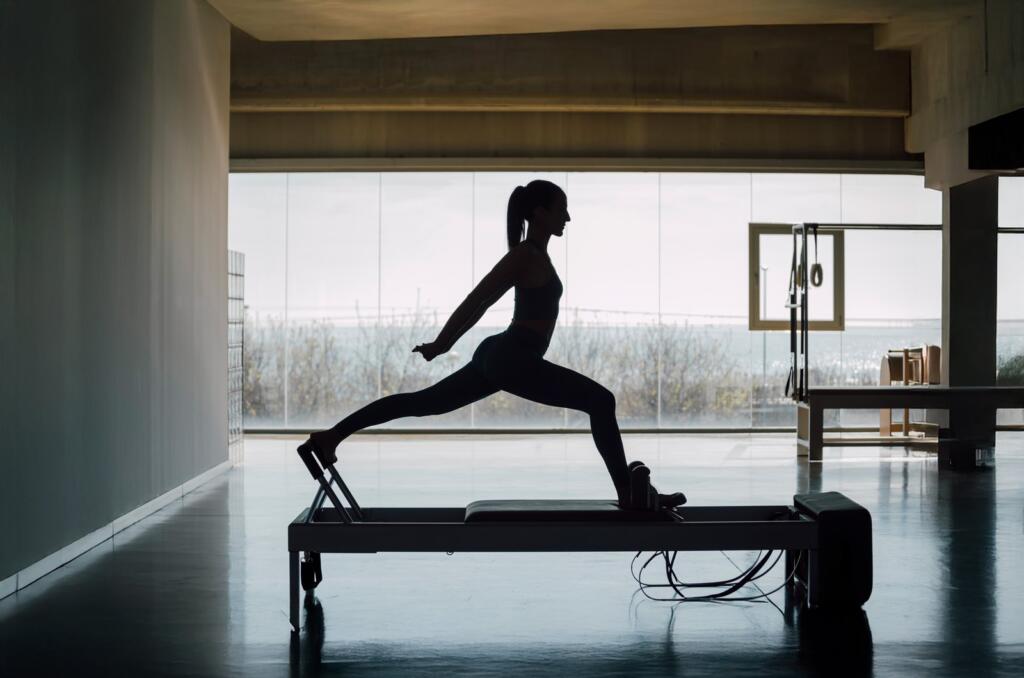
Pilates can also reveal differences between sides. Most people have a stronger or more coordinated side, but a persistent imbalance can affect how comfortably they shift weight, initiate turns or recover when knocked out of position. Unilateral footwork, standing exercises and controlled rotation give an instructor an opportunity to observe those discrepancies before they are magnified on the mountain. Black also uses the Reformer’s jumpboard to train leg power and practice movement patterns that echo skiing.
Mobility is part of the equation too. Ski boots restrict the ankle, while the sport asks the knees and hips to repeatedly flex and extend. Adequate mobility through the ankles, hips and upper back helps the body distribute movement more effectively instead of asking one area to compensate for another.
Shifting Into Season
Once regular ski days begin, more is not necessarily better. A demanding workout that builds capacity in November could simply create fatigue when performed between two January weekends on the mountain.
In-season training is about retaining the strength developed during the preseason while leaving enough energy for the activity itself. For many recreational skiers and snowboarders, that means reducing training volume while continuing to touch the essentials: strength, mobility, balance and cardiovascular fitness. “What dictates harder training or recovery is the frequency of days spent on the mountain or in the gym. Listen to your body and don’t push over the limits to avoid injuries,” Kelly says.
A skier who lifted three times a week during the preseason might reduce that to one or two concise, full-body sessions during the season. The weights do not necessarily need to become light, but the number of sets or exercises may decrease.
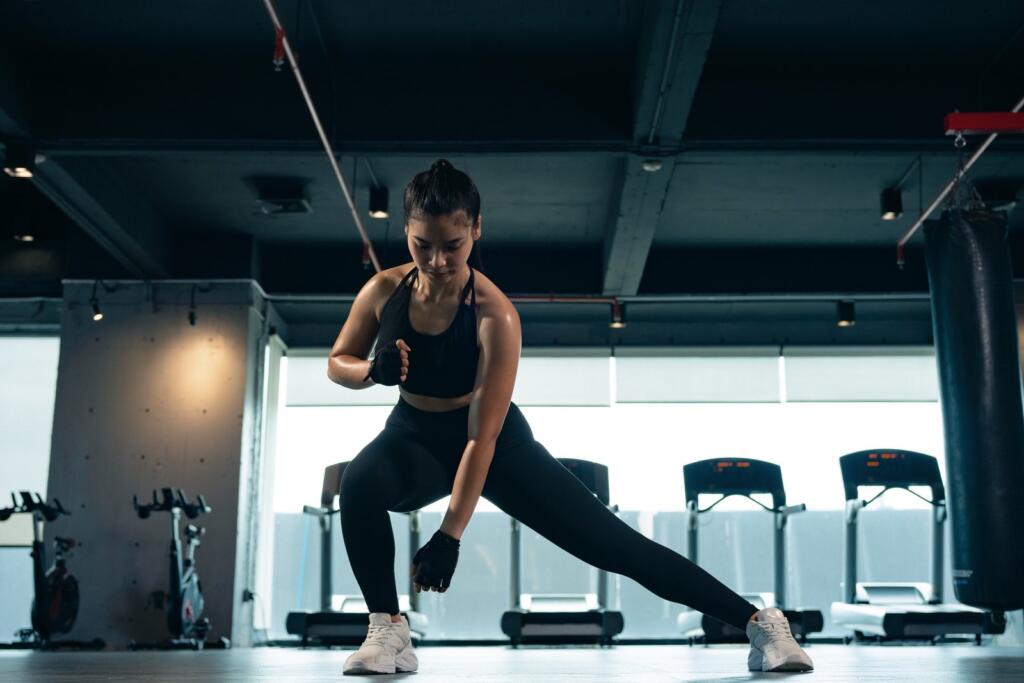
Timing matters too. Harder strength work can be scheduled earlier in the week, with mobility, light cardio or Pilates closer to a ski day. A strenuous lower-body workout the day before skiing is unlikely to improve anyone’s experience on the mountain.
Recover, Realign, Repeat
In season, Pilates can shift from preparation to maintenance. A session between ski days can restore movement through stiff hips and the upper back, reinforce core control and address the asymmetries that emerge after hours of turning, bracing and balancing.
The session can still be active; its intensity depends on how the skier feels and when they plan to head back to the mountain. “Pilates can also aid in recovery with integrated strength and flexibility movements as well as specific hip, hamstrings, quads and inner thigh stretches,” Black says.
Recovery does not have to mean doing nothing. Walking, gentle cycling, mobility work and easy Pilates encourage movement without adding substantial stress. Sleep, hydration and adequate nutrition also play essential roles, particularly during multiday ski trips.
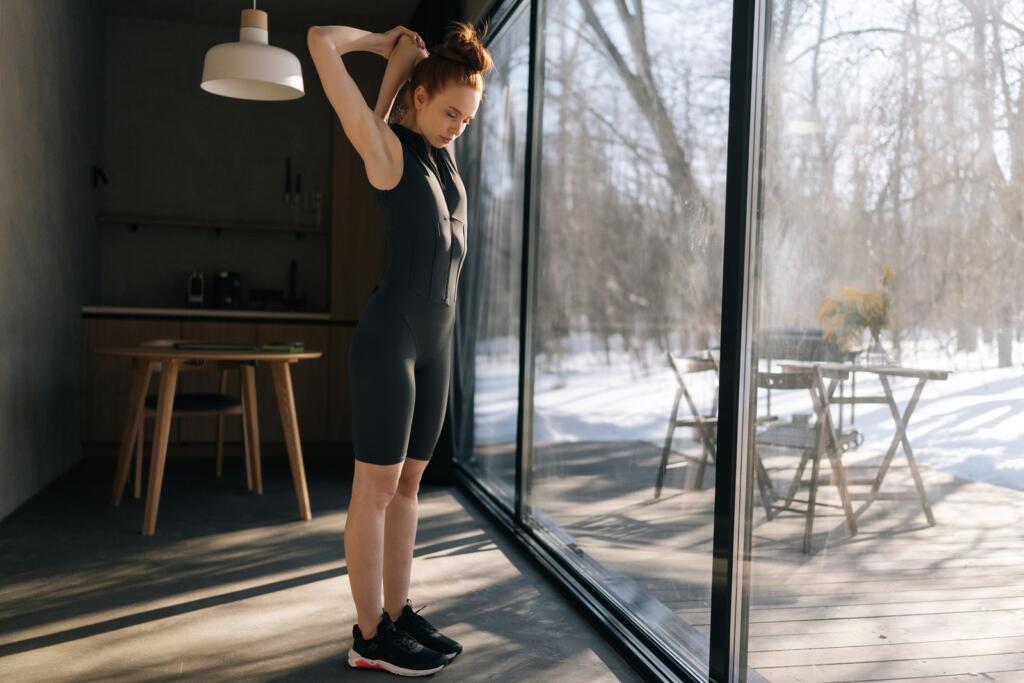
Soreness is expected when the body encounters a new or unusually demanding activity. Sharp pain, swelling, instability or discomfort that changes normal movement is different and deserves attention rather than another workout layered on top.
Ultimately, successful ski conditioning is not a race toward peak fitness on opening day. It is a season-long process. Build strength before the snow arrives, adjust once time on the mountain increases and use recovery strategically. The reward is not simply surviving the first run—it is having enough strength, control and energy to enjoy the last one.
Skiing + Boarding Training Options at the Club
These series are designed to improve the strength, balance, endurance and stability needed for skiing and snowboarding throughout the entire season.
Pilates for Skiers
Nov 4 | Nov 11 | Nov 18
Wednesdays, 11:30 AM–12:20 PM | Nancy Black
Dec 2 | Dec 9 | Dec 16
Wednesdays, 11:30 AM–12:20 PM | Nancy Black
Preseason and Early-Season Skiing and Snowboarding Conditioning
Preseason: Oct 29 | Nov 5 | Nov 12 | Nov 19
Thursdays, 5:30–6:15 PM | Catherine Kelly
Early-Season: Dec 3 | Dec 10 | Dec 17
Thursdays, 5:30–6:15 PM | Catherine Kelly
Member Perk
Enjoy 20% off Single Day passes at Crystal Mountain Resort this winter.
Exclusions apply. More info here.